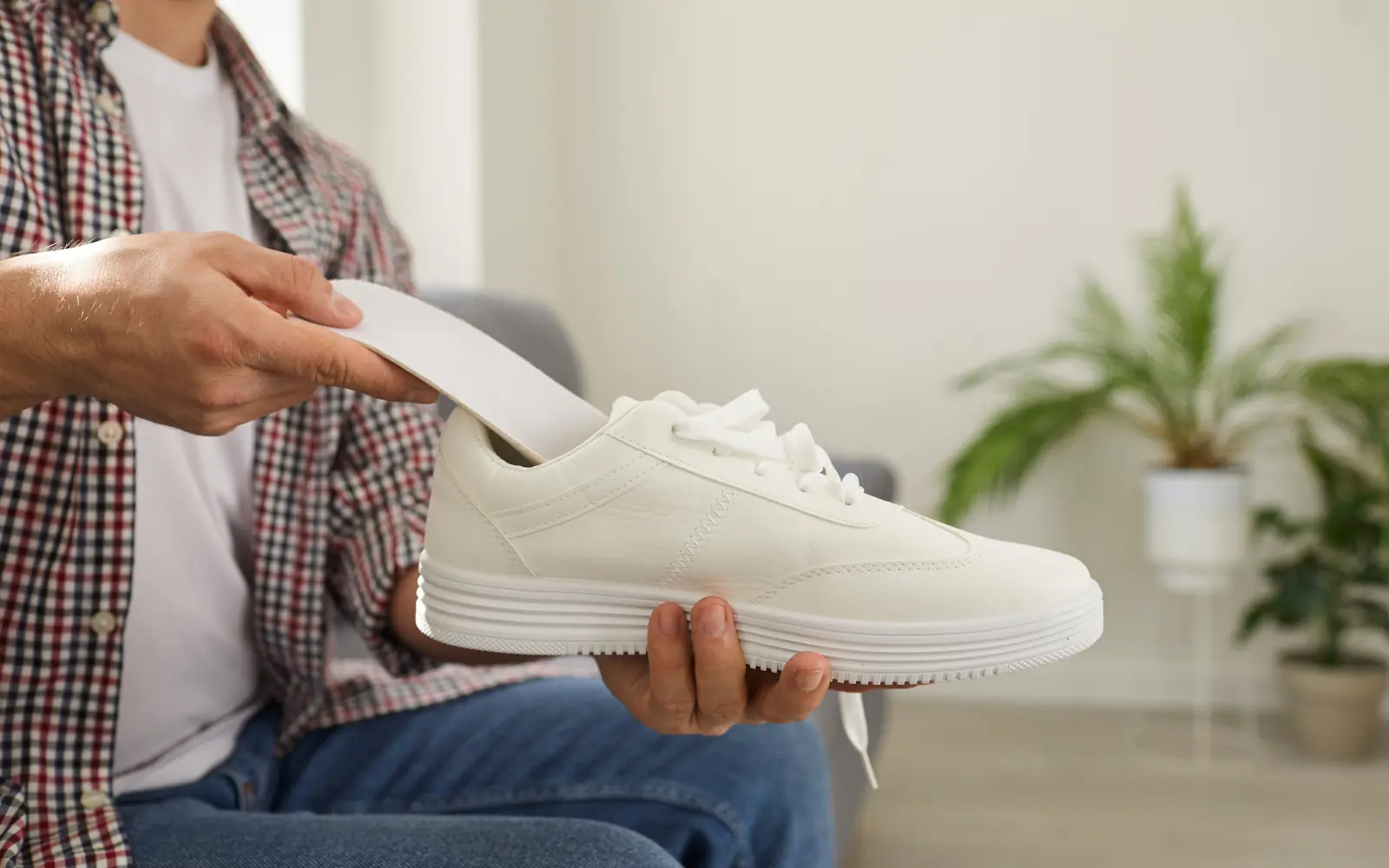
Insoles
Best Heel Cups for Plantar Fasciitis (2026)
Heel cups are one of the few cheap heel pain products with a clear mechanism, and they work best when the heel pad itself is sore — a bruised feeling in the middle of the heel that is worse barefoot on hard floors. For that, a firm rubber cup such as Tuli’s Classic or a silicone cup such as the PowerStep Power Heeler is a sensible, inexpensive first step. If your pain is driven by arch strain, an arch-supporting insole will usually help more.
Heel cups, also sold as heel cushions, heel seats and heel protectors, are one of the cheapest things you can buy for heel pain, and one of the most misunderstood. They are often sold as a cure-all for plantar fasciitis, and for some people they make an immediate difference. For others they do very little, and the reason is not the brand. It is which part of the heel is hurting.
This guide explains what a heel cup actually does, who it helps, who it helps less, and which products are worth considering. I have kept the list to cups whose materials and design I could confirm from the manufacturer or a medical supplier.
How we choose: products are judged on how well their design suits the clinical job a heel cup does — containing and cushioning the heel fat pad — following the same approach as the four features that matter; no brand pays for placement. Links to Amazon are affiliate links, so we may earn a commission at no cost to you (disclosure).
Quick picks
Best overall: Tuli’s Classic Heel Cups
Firm, ribbed rubber that holds its shape and does not bottom out quickly.
Best silicone: PowerStep Power Heeler
All-silicone gel cup for a bruised or thinning fat pad.
Best premium: Bauerfeind ViscoSpot
Three firmness zones, with the softest spot under the painful point.
Best softer feel: Tuli’s So Soft Heavy Duty
Fabric-lined, softer version of Tuli’s design for sensitive heels.
Best budget: Vive Health Silicone Heel Cups
Medical-grade silicone in four size bands at a low price.
Best with arch support: Dr. Scholl’s Pain Relief Orthotics for Heel Pain
A three-quarter insert that combines a heel cup with arch shaping.
On this page
What a heel cup actually does
Under your heel bone sits the heel fat pad: a dense cushion of fat held in small chambers by tough fibrous walls. It is your built-in shock absorber. When you stand, it should stay gathered beneath the bone like a firm water balloon. When it is loaded without support, barefoot on a hard floor or in a thin flat shoe, it splays sideways and the bone sits closer to the ground.
A heel cup does three things:
- It contains the fat pad. The raised sides of the cup stop the pad spreading outwards under load, so more of it stays under the bone where it is needed. This is the most important function.
- It adds cushioning. The material beneath the heel absorbs some of the impact the fat pad would otherwise take.
- It raises the heel slightly. A few millimetres of extra height reduces tension in the calf and Achilles, which can ease pull on the plantar fascia a little.
What a heel cup does not do is support the arch. The plantar fascia runs from the heel to the toes, and in classic plantar fasciitis much of the strain comes from the arch flattening under load. A cup that only sits under the heel cannot control that.
Who heel cups help, and who they help less
Heel cups tend to help most if:
- The pain is right in the centre of the heel pad, rather than on the inside edge towards the arch.
- It feels like a bruise or a stone bruise, and is worse walking barefoot on hard floors.
- Your heel pad feels thin, or you can feel the heel bone more easily than you used to. This is typical of heel fat pad atrophy, which becomes more common with age and after repeated steroid injections.
- You have bruised your heel through a jump, a fall or a sudden increase in walking on hard ground. See our guide to a bruised heel.
- You have plantar fasciitis and also feel general heel pad soreness on long days.
- You have a heel spur on X-ray. Not because the cup treats the spur, but because extra cushioning under a tender heel is comfortable while the fascia is treated.
- You spend long days on hard floors. Nurses, warehouse and retail staff often find a cup makes the last hours of a shift more comfortable.
- Your child has Sever’s disease; see below.
Clinical reference texts note that a simple silicone heel cup is often effective for fat pad atrophy, and that cup-shaped silicone designs gave the most relief. Orthopaedic guidance also lists heel pads and heel cups among the standard non-surgical options for heel pain. In an older trial in plantar fasciitis, people given a silicone heel insert alongside stretching did at least as well as those given custom orthoses.
Heel cups tend to help less if:
- The pain is on the inside front edge of the heel, where the plantar fascia attaches.
- It is sharpest with the first steps in the morning or after sitting, then eases as you walk around.
- You have flat or flexible feet that roll in noticeably.
That pattern points to fascial tension driven by the arch. A heel cup may take the edge off, but an arch-supporting insole usually does more. Our plantar fasciitis insoles guide covers the options. Many people have a mix of both, in which case an insole with a deep built-in heel cup, or a shoe with a firm counter plus a heel cup, is the practical answer.
Heel cups do little or nothing for:
- Pain at the back of the heel. Insertional Achilles problems, Haglund’s deformity and bursitis need height and a soft collar, not a cushion underneath. A thick cup can lift the sore spot into the shoe’s heel counter and make it worse. A heel lift is the right tool.
- Burning or numb heel pain. Nerve pain does not come from impact, and a cushion does not reach it.
- A heel stress fracture. A cup may make walking more comfortable, but it does not protect a crack in the bone.
A quick self-test. Stand barefoot and press firmly into the very centre of your heel pad with your thumb, then into the inside front edge of the heel. If the centre is the more tender spot, a heel cup is a good first purchase. If the front inside edge is worse, start with an arch-supporting insole.
Types of heel cups: rubber, silicone, gel or foam
Heel cups look similar and they are not interchangeable. Soft cups lean on cushioning; firm, deep cups lean on containment. The best ones for a thinned pad do both.
| Type | Main job | Suits | Limits |
|---|---|---|---|
| Soft gel cup | Cushioning | A bruised or tender heel; casual and work shoes | Can feel warm and slide; compresses over months |
| Silicone cup | Cushioning with some containment | Fat pad atrophy, bruised plantar fasciitis, children | Adds a few millimetres of height; check heel slippage |
| Ribbed rubber cup | Containment and shock absorption | Sever’s disease and sports, where the cup takes heavy impact | Bulkier; needs a shoe with some depth at the heel |
| Firm plastic heel cup | Containment | A thinned pad that spreads under load; often combined with a soft top layer | Little cushioning on its own; edges can rub |
| Flat heel pad or cushion | Cushioning only | Mild tenderness; shoes with no room for a cup | No rim, so no containment — the least effective for a thinned pad |
Firm rubber (such as Tuli’s Classic) holds its shape well, resists bottoming out and cups the fat pad firmly. It feels less squishy than gel, which some people take as a sign it is not working. It usually is; the containment is the point.
Silicone gel feels soft and cushioned from the first step, which is welcome when the heel feels bruised. It is heavier and can feel warm, and cheaper silicone cups can be quite flat with shallow sides, reducing the containment effect.
Viscoelastic or multi-zone designs (such as Bauerfeind’s ViscoSpot) combine firmer areas for support with a softer zone under the painful point. They cost more.
Foam or felt heel pads cushion and lift but usually have little or no raised edge, so they do less to contain the fat pad. They are better thought of as heel lifts.
Firm plastic cups are worth considering when a soft one helps but not enough, because the pad is spreading rather than simply thin. Whichever material you choose, look for a proper raised rim; a flat pad without one cushions but does not contain.
The best heel cups
1. Tuli’s Classic Heel Cups — best overall
Tuli’s Classic is the cup I find myself describing most often. It is made from moulded synthetic rubber with a ribbed, waffle-pattern underside and a smooth surface against the heel. That multi-cell design compresses and recovers with each step, and the firm rubber resists flattening, so it keeps cupping the fat pad for longer than softer gel cups.
Sizing is by body weight rather than shoe size: Regular for people under 175 lb and Large above that. It is flexible enough to fit most closed shoes and raises the heel slightly, which also helps if you have some calf or Achilles tightness alongside the heel pain.
- Material: moulded synthetic rubber, ribbed waffle design
- Type: firm heel cup
- Sizes: Regular (under 175 lb), Large (over 175 lb)
- Fits: most closed shoes
Good for: fat pad pain, bruised heels, and plantar fasciitis with heel pad soreness, especially in heavier people.
Skip it if: you want an immediately soft, squishy feel; the firmness takes a day or two to get used to.
2. PowerStep Power Heeler — best silicone heel cup
The Power Heeler is made entirely of medical-grade silicone gel, and PowerStep markets it specifically for heel spurs, fat pad atrophy and plantar fasciitis. Silicone gives a soft, cushioned landing that many people with a thin or bruised fat pad find comfortable from the first step, and the cupped shape helps gather the pad beneath the heel bone.
It comes in two sizes, Small and Regular, based on shoe size. It can be hand washed, and if the gel becomes tacky, a sprinkle of powder sorts it out.
- Material: 100% medical-grade silicone gel
- Type: soft heel cup
- Sizes: Small (men’s 5–9, women’s 5.5–9.5), Regular (men’s 9.5+, women’s 10+)
- Fits: athletic, casual, dress and work shoes
Good for: fat pad atrophy, older adults whose heel pad has thinned, and people who prefer a soft feel.
Skip it if: your feet run hot or your shoes are snug at the heel, as silicone adds bulk and warmth.
3. Bauerfeind ViscoSpot — best premium heel cup
Bauerfeind’s ViscoSpot heel cushion is made from a soft viscoelastic material with three zones of different firmness. The softest, a blue spot, sits under the area where heel pain typically starts, while firmer surrounding zones spread the load. It is a thoughtful design, as it cushions the sore point without letting the rest of the heel sink.
Bauerfeind lists it for calcaneal spurs, plantar fasciitis, Achilles tendonitis and Haglund’s deformity. It is sized by shoe size and is noticeably more expensive than the alternatives, at around $60–$70 a pair on Bauerfeind’s own site.
- Material: soft viscoelastic material, three firmness zones
- Type: premium heel cushion with cupped shape
- Sizes: by shoe size (check the brand’s chart)
- Care: hand wash only
Good for: a very localised sore spot on the heel pad, and people willing to pay more for a refined design.
Skip it if: you are on a budget or not yet sure a heel cup suits you; try a less expensive cup first.
4. Tuli’s So Soft Heavy Duty — best softer feel
If the Classic feels too firm, Tuli’s So Soft Heavy Duty uses the same multi-cell, multi-layer principle with a soft cloth heel bed and fabric lining. The manufacturer describes it as lighter and softer than other heel cups. It has a low-profile back so it fits athletic shoes, work boots and roomy lace-ups, and is sized by weight, gender and shoe size in Regular and Large.
- Material: multi-cell cup with soft cloth heel bed and fabric lining
- Type: softer heel cup
- Sizes: Regular, Large (by weight and shoe size)
- Fits: athletic shoes, cleats, work boots, roomy lace-ups
Good for: sensitive heels, people who stand all day in work boots, and anyone who found a rubber cup too hard.
Skip it if: your shoes are slim at the heel, such as dress shoes; the cup needs some space.
5. Vive Health Silicone Heel Cups — best budget option
Vive’s heel cups are latex-free, medical-grade silicone with extra cushioning beneath the heel and a denser inset for support. They are not left- or right-specific and can be moved between shoes. Four size bands (two men’s, two women’s) mean a closer fit than many one-size cups. They will not fit open-backed shoes or sandals.
At roughly ten dollars a pair, they are a low-risk way to find out whether a heel cup helps you before spending more.
- Material: medical-grade, latex-free silicone with a denser inset
- Type: soft heel cup
- Sizes: men’s 6–9.5 and 10–13; women’s 4.5–8.5 and 9–13.5
- Fits: closed-heel shoes only
Good for: trying a heel cup for the first time, or keeping a spare pair in work and casual shoes.
Skip it if: you need firm containment for marked fat pad thinning; a firmer cup holds the pad better.
6. Dr. Scholl’s Pain Relief Orthotics for Heel Pain — best heel cup with arch support
This is not a pure heel cup, and that is the point. It is a three-quarter-length insert with contoured heel cups and arch shaping, designed to fit most shoes without trimming. If your heel pain is a mix of fat pad soreness and fascial strain, which is common, it addresses both in one product.
Dr. Scholl’s does not publish the material composition. It is sold in men’s and women’s size bands and the manufacturer recommends replacing it about every six months.
- Material: not published by the manufacturer
- Type: three-quarter insert with heel cup and arch shaping
- Sizes: men’s and women’s size bands
- Fits: most shoes without trimming
Good for: mixed heel pad and arch pain, and people who want one inexpensive insert from a pharmacy shelf.
Skip it if: you already wear a full-length orthotic, or you need firm, durable arch control; a dedicated insole will last longer.
For barefoot sports and children. Tuli’s Cheetah Gen2 combines a multi-cell heel cup with a neoprene compression sleeve, so it stays on without a shoe. It is aimed at gymnasts, dancers and martial artists, including young athletes with Sever’s disease, and is sized by measuring around the arch rather than by shoe size. Check price on Amazon.
Comparison table
| Product | Material | Feel | Sizing | Best for |
|---|---|---|---|---|
| Tuli’s Classic | Synthetic rubber | Firm | By body weight | Fat pad containment |
| PowerStep Power Heeler | Silicone gel | Soft | Small, Regular | Fat pad atrophy |
| Bauerfeind ViscoSpot | Viscoelastic, 3 zones | Zoned | By shoe size | Localised sore spot |
| Tuli’s So Soft Heavy Duty | Multi-cell, fabric lined | Soft | Weight and shoe size | Sensitive heels, work boots |
| Vive Health Silicone | Medical-grade silicone | Soft | Four size bands | Budget, first try |
| Dr. Scholl’s Heel Pain Orthotics | Not published | Moderate | Men’s, women’s bands | Mixed heel and arch pain |
How to fit and use heel cups
- Use them in both shoes. A cup raises the heel slightly, so wearing one on only one side can tilt your pelvis.
- Place it right at the back. The rim should cradle the heel, not sit under the arch. Most cups go on top of the shoe’s own insole.
- Put them in the shoes you wear most, including any indoor shoes or slippers. Bare feet on hard floors undo a lot of the benefit.
- Check the fit at the back of the heel. If the cup lifts your heel so it slips out of the shoe or presses on the Achilles, lace the shoe a little firmer, or try a deeper shoe or a thinner cup.
- Pair them with a shoe that has a firm heel counter. The counter and the cup work together to keep the fat pad gathered. Our best shoes for heel spurs and best shoes for heel pain guides list shoes with good counters.
- Give it two to three weeks. If there is no change by then, the fat pad is probably not the main problem, and an arch-supporting insole, stretching and loading exercises are the next step.
- Replace them when they flatten. A cup that no longer springs back, or is visibly thinner under the heel, has stopped doing its job.
- Wash them. Most silicone cups can be rinsed in warm soapy water and air-dried, which also restores some grip.
Heel cups for children with Sever’s disease
An active child aged roughly 8 to 14 with pain at the back and sides of the heel, worse with running sports, very often has Sever’s disease: irritation of the growth plate where the Achilles pulls on the heel bone. A soft silicone or ribbed rubber heel cup in football boots and trainers both cushions and slightly raises the heel, easing the pull on the growth plate. It is often the single most useful purchase for an active child with heel pain. Combined with calf stretching and adjusting how much running the child does, most children settle. For gymnastics, dance and martial arts, where there is no shoe, see the Tuli’s Cheetah Gen2 note above.
Watch
Dr. Biernacki on which heel pain devices earn their place and which make things worse.
More model comparisons on our sister review site Podiatrist Tested, by the same surgeon (its retailer links are affiliate links): insoles for plantar fasciitis and shoes for heel fat pad atrophy. If an insole suits you better than a cup, insoles for heel pain matches the insert to each cause.
When a heel cup is not the answer.
If pain is worse the more you walk and does not ease, or there is swelling or bruising across the heel, or it hurts when squeezed from the sides, a stress fracture of the heel bone needs to be ruled out.
Numbness, burning or tingling points at a nerve rather than the fat pad or fascia, and cushioning alone will not resolve it.
If you have diabetes or reduced sensation, have any insert assessed professionally, as a poorly fitting cup can create pressure points you may not feel.
A heel that is red, hot and swollen, or pain that wakes you at night, should be assessed promptly rather than managed with inserts. When to worry about heel pain sets out the red flags.
Cushioning eases it. Loading treats it. If your worst pain is the first step of the morning, Dr. Tom’s free 14-day plan from The Heel Pain Playbook adds the stretch and heel raises that treat the fascia, with photos and a tracker. Get the free 14-day plan.
Common questions
Do heel cups work?
For the right heel, yes. Heel cups work best for a thinned or bruised heel fat pad, where they both cushion and gather the pad back under the bone. They also help children with Sever’s disease and many people with plantar fasciitis who have a bruised component. They do little for pain at the back of the heel or for nerve pain.
Do heel cups work for plantar fasciitis?
They can, particularly when the heel pad itself is sore. Heel cups gather and cushion the fat pad and raise the heel slightly, which helps a bruised or thinning pad. For classic plantar fasciitis driven by arch strain, with pain on the inside front edge of the heel and worst first thing in the morning, an arch-supporting insole tends to help more. Many people benefit from both.
Are gel or rubber heel cups better?
Neither is better for everyone. Firm rubber cups such as Tuli’s Classic hold their shape and contain the fat pad well, which suits most people with heel pad pain. Silicone gel cups feel softer straight away, which many people with a very bruised or thin heel prefer. If you are unsure, try an inexpensive silicone cup first, then move to a firmer one if it flattens or feels unsupportive.
Should I wear heel cups all day?
Yes, if they are comfortable. Heel cups work best when they are in the shoes you wear most, including any indoor footwear. Introduce them over a day or two if they feel strange at first. If they cause new pain at the back of the heel or make your shoes slip, check the fit or try a thinner cup. There is no need to wean off them while the heel is sore; once it has settled, many people keep them for long days on their feet.
Can heel cups make heel pain worse?
Occasionally. A thick cup in a shallow shoe can make the heel slip, and for pain at the back of the heel the extra height can push the sore spot into the shoe’s heel counter. A firm cup with a hard edge can rub. If a cup causes new pain or blistering, stop using it.
What is the difference between a heel cup and an insole?
A heel cup sits only under the heel and focuses on cushioning and containing the fat pad. An insole runs the length of the foot and supports the arch, which reduces strain on the plantar fascia. Heel cups suit heel pad pain; insoles suit arch-driven fascial pain. Some three-quarter inserts combine both, which helps when you have a mix.
Can heel cups help heel fat pad atrophy?
Yes. Fat pad atrophy is one of the conditions where heel cups help most, because the cup gathers the remaining fat under the heel bone and adds cushioning that the thinned pad can no longer provide. Clinical reference texts describe a simple silicone heel cup as an effective first-line measure, alongside cushioned shoes and avoiding barefoot walking on hard floors.
How long do heel cups last?
It depends on the material, your weight and how much you walk. Firm rubber cups generally keep their shape longer than soft gel ones. Replace a cup when it no longer springs back after you press it, when it has split, or when you notice your heel pain returning despite wearing it. Dr. Scholl’s suggests replacing its heel pain orthotics around every six months.
- Pfeffer G, et al. Comparison of custom and prefabricated orthoses in the initial treatment of proximal plantar fasciitis. Foot & Ankle International, 1999.
- Allam AE, Chang KV. Plantar Heel Pain. StatPearls, NCBI Bookshelf.
- American Academy of Orthopaedic Surgeons. Heel Pain. OrthoInfo.
- Orthopaedic Section, APTA. Heel Pain – Plantar Fasciitis: Revision 2023. Journal of Orthopaedic & Sports Physical Therapy.
Related heel pain guides
- Insoles for heel pain
- Best shoes for heel pain
- Heel lifts for Achilles tendonitis
- Heel fat pad atrophy
- Bruised heel
- Plantar fasciitis insoles
- Plantar fasciitis
- Plantar fasciitis treatment
- Heel spurs
- Best shoes for heel spurs
- Best shoes for plantar fasciitis
- Sever’s disease
Heel pain in Michigan?
Dr. Biernacki sees heel pain at Balance Foot & Ankle in Howell and Bloomfield Township. If the right shoes and inserts have not settled it, an assessment can work out which tissue is responsible.
This page is education, not a diagnosis. Read our editorial policy for how it was written and what it will not claim.