Footwear
Best Slippers for Plantar Fasciitis (2026): Supportive House Shoes a Foot Surgeon Recommends
The best slippers for plantar fasciitis have a contoured arch, a cupped heel and a sole firm enough that you could walk to the post box in them. Soft, flat slippers are barely better than bare feet. These seven house shoes meet the brief, and each comes with a note on who should skip it.
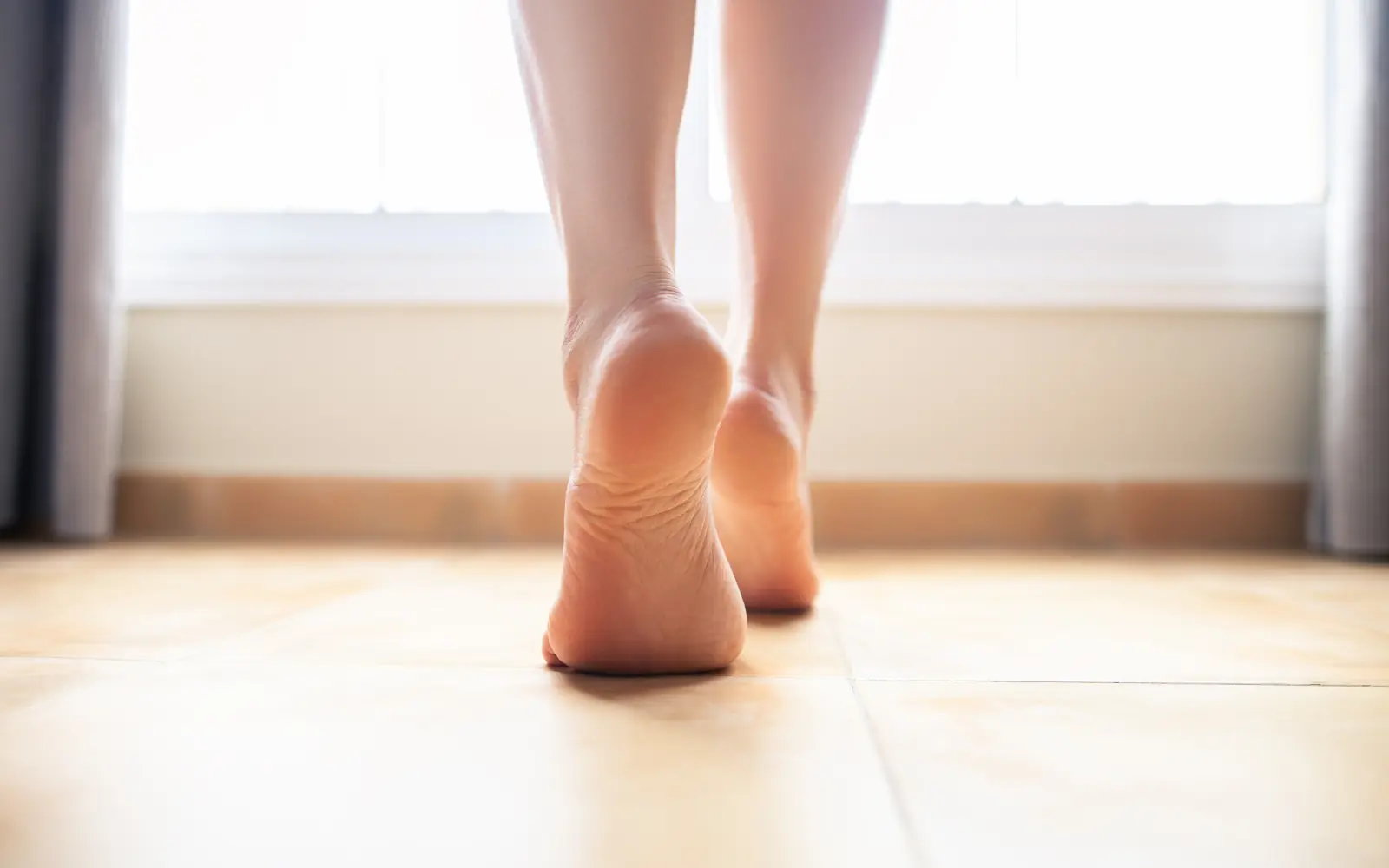
Most people with plantar fasciitis put real thought into their trainers and almost none into what they wear at home. Yet home is where much of the day’s walking happens: the kitchen, the stairs, the laundry, the school run in and out of the door. Much of it is done barefoot or in socks on tile, laminate and hardwood.
In clinic I describe that as the biggest uncontrolled load on the heel. You can be careful about shoes for eight hours and undo much of it in the two hours either side. The fix is simple: supportive indoor footwear, on from the very first step out of bed.
How we choose: picks are judged against the clinical criteria in the four features that matter, adapted for house shoes; no brand pays for placement. Links to Amazon are affiliate links, so we may earn a commission at no cost to you (disclosure).
Quick picks
Best overall: Orthofeet Charlotte
Removable orthotic insole, arch booster, three widths and a higher heel.
Best slipper-style: Vionic Gemma II
Soft upper over a genuine contoured footbed with a deep heel cup.
Best clog: Birkenstock Boston Soft Footbed
The cork contour in a closed-toe clog that slips on beside the bed.
Best for cold floors: Haflinger Grizzly GZ
Wool felt with a cork arch and a slip-resistant rubber sole.
Best for a tender heel: OOFOS OOcoozie
Very soft recovery foam with a cupped heel and an insulated lining.
On this page
Why house shoes matter for plantar fasciitis
Plantar fasciitis has a signature: sharp pain under the heel with the first steps after rest, which eases a little once you get moving. Overnight the foot rests pointing slightly downward and the plantar fascia and calf shorten. The first steps on a hard floor stretch that tissue suddenly, with no cushioning under the heel and nothing supporting the arch. That is why heel pain in the morning is often the worst of the day.
Clinical reviews of plantar heel pain list avoiding barefoot walking as part of the first line of care, alongside stretching and supportive footwear. In practice, this is one of the changes that patients notice fastest. It costs little and asks nothing of you except keeping a pair of shoes by the bed.
The same logic applies all day. Every time you sit, then stand, the first few steps load a fascia that has tightened again. A house shoe that supports the arch and cushions the heel takes the edge off each of those restarts. Hard floors make it matter more: tile and wood give nothing back, whereas carpet offers a little cushioning.
The rule I give patients. Your feet should not touch the floor bare until the heel has settled. Put supportive slippers where your feet land when you get out of bed, and another pair by the back door if you go in and out a lot.
What to look for in a slipper
A contoured arch. The footbed should rise under the arch, not lie flat. Memory foam alone feels lovely for the first few minutes and then compresses to nothing under the heel. Look for a moulded footbed in cork, firm EVA or an orthotic-style insole.
A cupped heel. A heel cup keeps the fat pad gathered under the heel bone where it cushions best, and holds the heel in position over the arch contour.
A real sole. You should not be able to fold the slipper in half. A firm rubber or EVA sole resists twisting and bending, which lowers the strain on the fascia. A rubber sole also grips on smooth floors, which matters on stairs and wet kitchen tiles.
A bit of heel height. A slightly raised heel eases tension in the calf and plantar fascia. Several picks here have a heel-to-toe drop well above that of a flat moccasin.
Something that holds the foot. A closed back is ideal. If you prefer a backless mule, choose one with an adjustable strap so your toes are not gripping to keep it on, for the same reason flip-flops are a problem.
Ideally, a removable insole. If you wear over-the-counter insoles or custom orthotics, a slipper with a removable footbed lets you use them at home too.
The 7 best slippers for plantar fasciitis
1. Orthofeet Charlotte — best overall
The Charlotte is the closest thing on this list to a supportive shoe dressed as a slipper. It is a slip-on with an adjustable side strap and a heel lip, built around Orthofeet’s removable orthotic insole, which the brand says is about a quarter of an inch thick. An arch booster is supplied, so you can raise the arch if the standard contour feels low. That removability also means you can swap in your own insoles or orthotics.
Orthofeet lists a 16.2 mm heel-to-toe drop, the highest of any pick here, which suits tight calves and strong first-step pain. It comes in medium, wide and extra-wide fittings. The suede upper has a water-repellent finish and the brand encourages wearing it outdoors, so it can double as a quick out-of-the-door shoe. Orthofeet lists it at $99.
- Drop: 16.2 mm
- Type: orthotic slipper with adjustable strap and heel lip
- Widths: medium (B), wide (D), extra wide (2E), women’s sizes 5–12
- Removable insole: yes, with arch booster included
Good for: moderate to severe morning pain, wide feet, orthotic users.
Skip it if: you want a light, soft-feeling slipper; this is structured and feels more like a shoe. Men should look at Orthofeet’s men’s styles instead.
2. Vionic Gemma II — best slipper-style
If you want something that looks and feels like a proper slipper, the Gemma II is a sensible choice. Underneath the plush upper is Vionic’s VIO MOTION footbed, with a contoured arch and a deep heel cup, on a flexible EVA midsole. The adjustable hook-and-loop strap helps hold the foot onto the footbed, and the synthetic outsole is designed for indoor and outdoor wear. Vionic states it carries the APMA Seal of Acceptance.
The arch support is moderate rather than firm, which many people find easier to live with at home. It is a mule, so there is no closed back; the strap is what stops the toes clawing. One US retailer lists it at around $85.
- Drop: not published; heel height about 3.5 cm according to one retailer
- Type: contoured-footbed mule slipper
- Widths: medium only
- Removable insole: no
Good for: mild to moderate heel pain; people who want warmth and softness with real support underneath.
Skip it if: you need a wide fitting, use orthotics, or need a closed heel to feel secure on stairs.
3. Birkenstock Boston Soft Footbed — best clog
Many of my patients already own Boston clogs and wear them as house shoes, and it is a good habit. The Boston has the classic Birkenstock contour — deep heel cup, defined arch, toe grip — in a closed-toe clog with an adjustable buckle strap. The Soft Footbed adds a layer of foam under the lining for a gentler feel and an easier break-in. The EVA sole is light and grips reasonably well indoors.
Being a clog, it is open at the back, so the deep heel cup and strap do the job of keeping you in place. It slips on in a second, which is exactly what you want beside the bed. If you prefer a wool felt slipper with a similar idea, Birkenstock’s Zermatt uses an anatomically shaped cork-latex footbed that is removable, with a choice of insoles.
- Drop: not published; modest built-in heel lift
- Type: contoured cork-latex clog
- Widths: regular, with narrow in some styles
- Removable insole: no (the Zermatt’s is)
Good for: people who like a firm, defined arch and want a shoe that goes from bed to garden.
Skip it if: your arch is sensitive to firm pressure, or you dislike open-back footwear on stairs. More on the footbed in are Birkenstocks good for plantar fasciitis.
4. Haflinger Grizzly GZ — best for cold floors
Haflinger’s wool felt clogs are a Michigan winter favourite for good reason. The Grizzly GZ pairs a breathable boiled-wool upper with an anatomically shaped cork footbed lined in felt, and a slip-resistant rubber sole. The cork gives a defined arch and heel seat much like a Birkenstock, but the felt upper keeps the foot warm on cold tile and basement floors.
It is a clog with an open back and no strap, so the fit has to be right: the heel should sit in the cup without your toes pushing to hold it. Haflinger lists it at $155.
- Drop: not published
- Type: cork-footbed wool clog
- Widths: one width
- Removable insole: not stated by the brand
Good for: cold houses, people who like a firm cork arch, indoor-outdoor use.
Skip it if: you need an adjustable fit or wide sizing, or you overheat easily.
5. OOFOS OOcoozie Thermo Mule — best for a very tender heel
Some heels are so sore in the morning that a firm cork footbed feels like standing on a ledge. For those weeks, OOFOS foam is a reasonable choice. The OOcoozie mule uses the same soft, impact-absorbing OOfoam as the brand’s sandals, which OOFOS says absorbs 37% more impact than traditional footwear foam, under a rounded, cupped heel. The Thermo version is lined with insulation for cold mornings. OOFOS states it carries the APMA Seal of Acceptance.
The trade-off is support. Soft foam reduces impact but does less to control the arch than a contoured footbed, and the mule has no back. I treat it as the slipper for flare-ups and for people with thin heel fat pads, rather than everyone’s default. OOFOS lists the Thermo Mule at about $120.
- Drop: not published
- Type: soft-foam recovery mule
- Widths: one width
- Removable insole: no
Good for: acute flare-ups, fat pad thinning, people who find firm arches uncomfortable.
Skip it if: you have flat, flexible feet that need firm arch control, or want a closed back.
6. Hoka Ora Recovery Mule — best for runners
Hoka’s Ora Recovery Mule is a closed-toe, open-back version of its recovery slide. It uses a drop-in sugarcane-based EVA midsole sitting in a moulded EVA cradle, which gives a cushioned heel and some structure around the foot. Retailers list it at 6 mm heel-to-toe drop and about 290 g.
It suits people who already run or walk in Hoka shoes and want the same cushioned feel after training. The arch contour is mild and there is no strap, so I would place it below the Orthofeet and Vionic picks for someone in the worst phase of morning pain.
- Drop: 6 mm
- Type: cushioned recovery mule
- Widths: one width (unisex sizing)
- Removable insole: the midsole is described as drop-in
Good for: runners, post-exercise wear, people who like a cushioned, sporty feel.
Skip it if: you need firm arch support, a higher heel, or a secure fit for stairs.
7. Acorn Scuff — best budget-friendly option
Not everyone needs an orthotic slipper, and Acorn is a reasonable step up from a flat supermarket slipper. The women’s Scuff has a multi-layer Cloud Cushion footbed with a raised heel and arch support, a microfleece lining and a non-slip sole that Acorn says grips on hardwood and outdoors.
Be clear about what this is: a cushioned slipper with a modest arch, not a structured one. It is a fair choice for mild symptoms or for someone whose heel has settled and who wants to keep it that way. If your first steps are sharply painful, choose one of the picks above.
- Drop: not published; raised heel
- Type: cushioned open-back slipper with modest arch
- Widths: one width
- Removable insole: no
Good for: mild symptoms, maintenance once pain has settled, smaller budgets.
Skip it if: you have significant morning pain or flat feet that need a firm arch.
Comparison table
| House shoe | Style | Arch | Drop | Removable insole | Best for |
|---|---|---|---|---|---|
| Orthofeet Charlotte | Strapped slip-on | Orthotic, booster | 16.2 mm | Yes | Severe morning pain, wide feet |
| Vionic Gemma II | Strapped mule | Contoured, moderate | Not published | No | Soft feel with support |
| Birkenstock Boston Soft Footbed | Clog | Firm cork contour | Not published | No | Firm arch, indoor-outdoor |
| Haflinger Grizzly GZ | Wool clog | Cork contour | Not published | Not stated | Cold floors |
| OOFOS OOcoozie Thermo | Mule | Soft, gentle | Not published | No | Flare-ups, thin fat pad |
| Hoka Ora Recovery Mule | Mule | Mild | 6 mm | Drop-in midsole | Runners, recovery |
| Acorn Scuff | Open-back slipper | Modest | Not published | No | Mild symptoms, budget |
A simple routine for the first step
Slippers work best as part of a short morning routine. This is what I suggest to most patients:
- Before you stand, sit on the edge of the bed and pull your toes back towards you for 30 seconds, or loop a towel around the ball of the foot and pull gently. Circle the ankles a few times.
- Put your feet straight into supportive house shoes placed where your feet land. Do not walk to the bathroom barefoot first.
- Keep the house shoes on until you change into outdoor shoes. That includes the trip downstairs to make coffee.
- Repeat the stretch after long sits during the day, then stand in your shoes.
If mornings remain the worst part of the day despite this, a night splint is worth discussing. The 2023 physical therapy guideline gives a strong recommendation for night splints in people with persistent first-step pain. The plantar fasciitis exercises page covers stretching and strengthening in detail.
Replace them when they flatten. House shoes are worn every day and often for years. When the heel cup has compressed or the sole folds easily, the support has gone and it is time for a new pair.
When shoes are not the answer.
If pain is worse the more you walk and does not ease, or there is swelling or bruising, it may be a stress fracture of the heel bone rather than plantar fasciitis. Reduce walking and get it examined.
Numbness, burning or tingling points at a nerve rather than the fascia, and slippers will not settle it; see heel nerve pain.
If you have diabetes or reduced sensation, have footwear assessed professionally. Never walk barefoot at home, check your feet daily, and choose house shoes with a closed toe and firm sole to protect against knocks and cuts you may not feel.
Shoes by the bed is step one of the plan. It is the first thing Dr. Tom’s free 14-day plan from The Heel Pain Playbook asks you to do, tonight. The rest comes day by day, with photos of each move and a tracker. Get the free 14-day plan.
Common questions
Should I wear slippers in the house if I have plantar fasciitis?
Yes, but supportive ones. Walking barefoot or in socks on hard floors removes all arch support and heel cushioning, and clinical reviews list avoiding barefoot walking as part of first-line care. A house shoe with a contoured arch, a cupped heel and a firm sole reduces strain on the plantar fascia during all the short trips around the home, which add up over a day.
Is it bad to walk barefoot with plantar fasciitis?
While the heel is painful, barefoot walking on hard floors tends to aggravate it, because the arch flattens and the heel lands without cushioning. It is especially hard on first steps after rest. Once symptoms have settled, short periods barefoot are usually fine, and foot-strengthening work can be done barefoot. During a flare, keep supportive shoes on from the moment you get out of bed.
Are memory foam slippers good for plantar fasciitis?
Not on their own. Memory foam feels comfortable at first but compresses under the heel within minutes and offers little arch support. If you like the soft feel, choose a slipper that combines cushioning with a contoured footbed or a firm sole underneath, such as the Vionic Gemma II, rather than a flat memory foam slipper.
Are Birkenstock clogs good house shoes for heel pain?
For many people, yes. The Boston clog has a deep heel cup and a defined arch, and it slips on quickly beside the bed. The Soft Footbed version is gentler to break in. Its open back means the heel cup has to hold you in place, so it suits people who are steady on their feet. If the arch feels too firm, try a softer option first.
Can I wear my orthotics in slippers?
Only in slippers with a removable footbed. The Orthofeet Charlotte has a removable orthotic insole that can be swapped for your own, and Birkenstock’s Zermatt has a removable footbed. Most mules and clogs have fixed footbeds. If you rely on orthotics, choose a house shoe that accepts them or keep a pair of slip-on trainers for indoor use.
What are the best house shoes for plantar fasciitis for men?
The same features apply: contoured arch, cupped heel, firm sole and a secure fit. The Birkenstock Boston, Haflinger Grizzly, OOFOS OOcoozie and Hoka Ora Recovery Mule all come in men’s or unisex sizing. Orthofeet makes men’s orthotic slippers built on the same insole system as the Charlotte, which suit men with wide feet or more severe pain.
- Allam AE, Chang KV. Plantar Heel Pain. StatPearls Publishing.
- Koc TA Jr, Bise CG, Neville C, Carreira D, Martin RL, McDonough CM. Heel Pain – Plantar Fasciitis: Revision 2023. Journal of Orthopaedic & Sports Physical Therapy, 2023;53(12):CPG1–CPG39.
- American Academy of Orthopaedic Surgeons. Heel Pain. OrthoInfo.
Related heel pain guides
- Heel pain in the morning
- Plantar fasciitis night splints
- Best sandals for plantar fasciitis
- Best shoes for plantar fasciitis
- Are Crocs good for plantar fasciitis?
- Are Birkenstocks good for plantar fasciitis?
- Plantar fasciitis insoles
- Plantar fasciitis exercises
- Heel fat pad atrophy
Heel pain in Michigan?
Dr. Biernacki sees heel pain at Balance Foot & Ankle in Howell and Bloomfield Township. If the right shoes have not settled it, an assessment can work out which tissue is responsible.
This page is education, not a diagnosis. Read our editorial policy for how it was written and what it will not claim.