Footwear
Insoles for heel pain: which insert for which heel
Shoe inserts do four different things: support the arch, cushion the heel, contain the fat pad and raise the heel. Each one helps a different cause of heel pain, and the wrong one can do nothing at all. Pick the job first, then the insert.
The insert aisle sells all four jobs under the same words — “heel pain relief”, “orthotic”, “support” — so most people buy by price or by how soft it feels in the hand. That is how a person with a bruised, thinned heel pad ends up with a rigid arch support, and a person with Achilles pain ends up with a gel insole that does nothing for the tendon.
This page sorts inserts by what they actually change, then matches them to each cause of heel pain. For plantar fasciitis specifically, including the trial evidence on custom versus prefabricated devices, see insoles for plantar fasciitis.
About product links. Our sister review site, Podiatrist Tested, written by the same surgeon, compares specific insoles. Its retailer links are affiliate links, so we may earn a commission from qualifying purchases at no extra cost to you.
On this page
The four jobs an insert can do
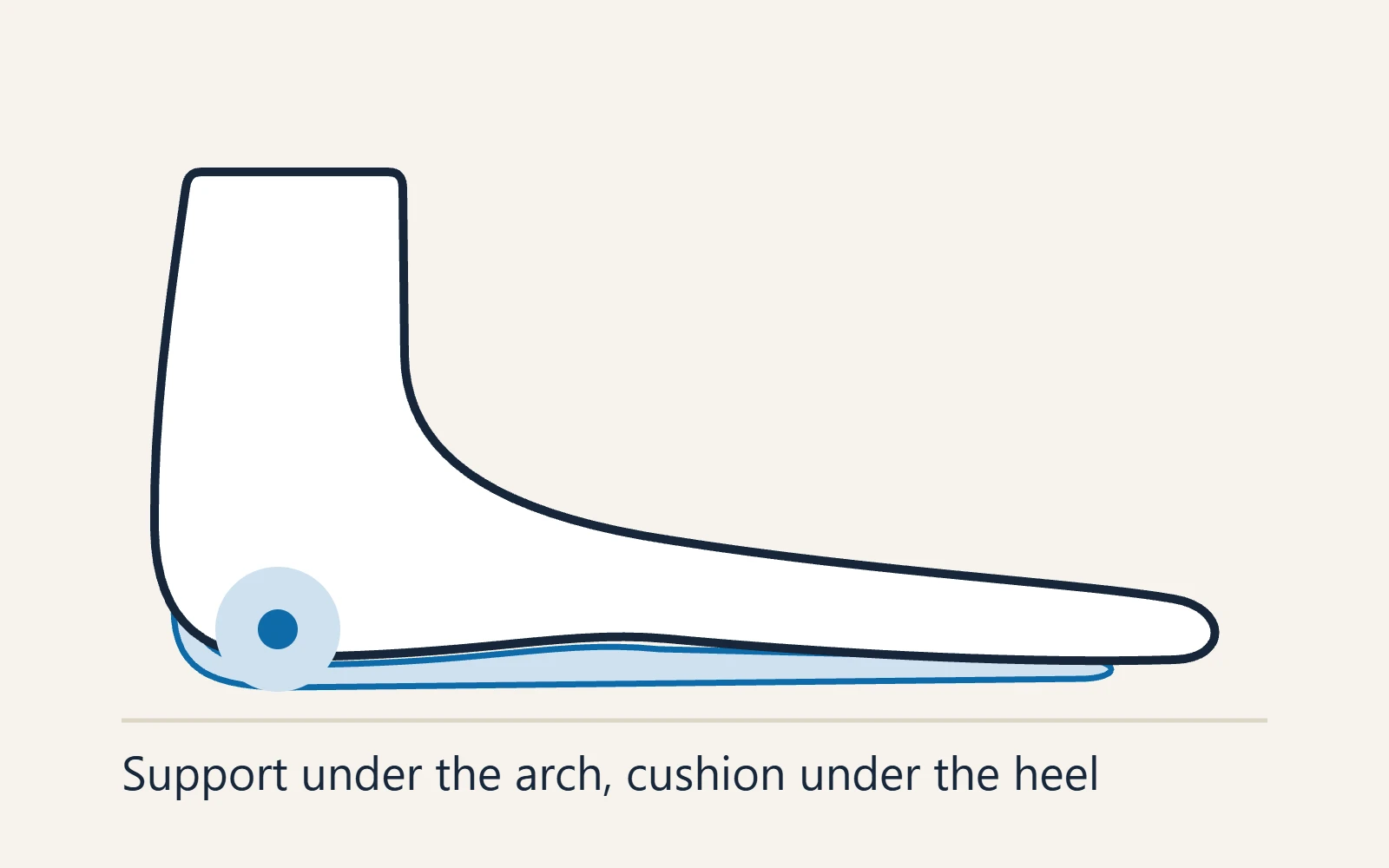
- Support the arch. A firm arch contour shares the load the plantar fascia would otherwise carry, which lowers the tension pulling on its heel attachment. This is the job that matters for plantar fasciitis.
- Cushion the heel. Gel, silicone or soft foam under the heel absorbs impact. It matters most when the heel’s own fat pad has thinned.
- Contain the fat pad. A deep, firm heel cup stops the fat pad spreading sideways as you land, so it stays gathered under the bone and keeps its natural cushioning thickness.
- Raise the heel. A wedge under the heel shortens the distance the Achilles has to stretch and reduces how hard the tendon is pressed against the back of the heel bone.
Most products do two or three of these to varying degrees. A good supportive insole has an arch contour and a heel cup. A gel heel cup cushions and contains but does not support the arch. A heel lift raises the heel and does nothing else. Knowing which job your heel needs tells you which product category to look in.
Which insert for which heel
| Cause | The job that helps | The insert |
|---|---|---|
| Plantar fasciitis | Arch support, plus containment | A firm, full-length supportive insole with a deep heel cup |
| Plantar heel spur | As plantar fasciitis, with extra cushion | A supportive insole; a cushioned heel cup if the heel is bruise-tender |
| Fat pad atrophy | Cushion and containment | A heel cup, or an insole with a deep cup and soft heel |
| Achilles tendinopathy, Haglund’s, bursitis | Heel raise | A heel lift in both shoes |
| Sever’s disease (children) | Cushion and a small raise | A soft heel cup, especially in sports boots |
| Nerve pain | Arch support to limit inward collapse | A supportive insole; avoid hard edges pressing on the inner heel |
| Stress fracture | Rest and assessment first | Cushioning helps comfort during recovery; it does not treat the fracture |
Arch support: for pain under the heel
For plantar fasciitis and the heel spur that often comes with it, the insert that helps is one that actually supports the arch under body weight. Push your thumb hard into the arch contour. If it compresses easily in your hand, it will flatten completely when you stand on it, and it will do almost nothing for the fascia however pleasant it feels. Soft gel arches are the commonest disappointment in this category.
Clinical practice guidelines recommend prefabricated or custom foot orthoses for short to medium-term relief of plantar heel pain, as an addition to stretching and loading rather than instead of it. Trials have not shown custom devices outperforming good prefabricated ones for straightforward plantar fasciitis, which is why a mid-priced prefab is the right first purchase. Insoles for plantar fasciitis covers what to look for, how stiff to go for your foot type, and why insoles fail when they fail.
Specific models: insoles for plantar fasciitis, insoles for standing all day and PowerStep Pinnacle vs Maxx vs Pulse on Podiatrist Tested.
Heel cups and cushions: for a bruised heel pad
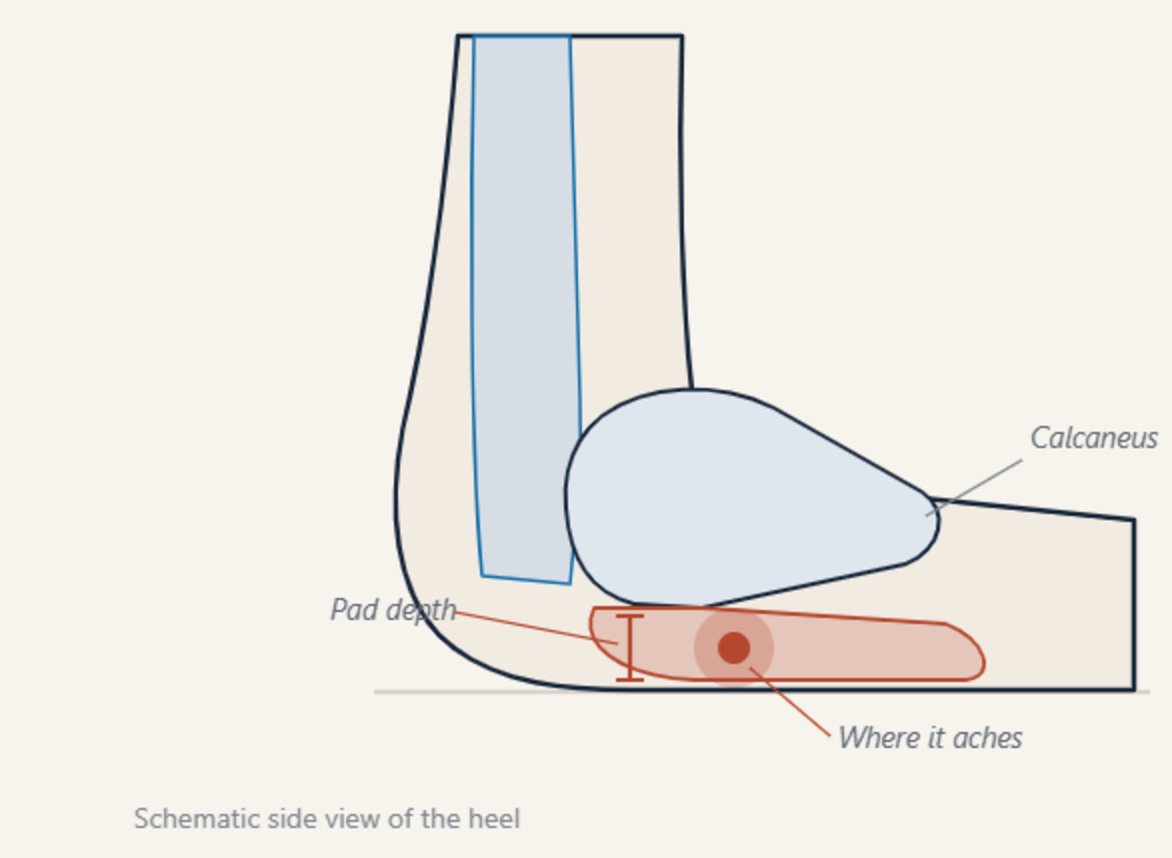
When the heel aches in the centre of the pad, worst on hard floors and barefoot, the missing ingredient is shock absorption rather than arch support. A heel cup does two things at once: the soft material cushions, and the raised rim gathers the fat pad under the bone so it keeps its thickness under load. Arch supports without a cushioned, cupped heel do little for this heel.
Heel cups are also one of the most useful inserts for children with Sever’s disease and for adults whose plantar fasciitis comes with a bruised quality. They are inexpensive, move easily between shoes, and an older trial in plantar fasciitis found a simple silicone heel insert combined with stretching did at least as well as custom orthoses. Heel cups covers the types, who they help and how to fit them.
Heel lifts: for the back of the heel
Pain at the back of the heel is a tendon and bursa problem, and arch support does very little for it. What helps is height. Raising the heel reduces how far the Achilles stretches with each step, and at the insertion it reduces how hard the tendon is pressed against the bone. In a randomised trial in mid-portion Achilles tendinopathy, heel lifts improved symptoms more than the standard eccentric calf exercise over twelve weeks.
Lifts go in both shoes, never one, unless you are correcting a measured leg-length difference. The shoe needs enough depth at the back that the heel does not ride up and out of it. Heel lifts for Achilles tendonitis covers heights, materials and how to wean off them.
A deep, rigid heel cup can make back-of-heel pain worse if its rim, or the extra height, pushes the sore spot into the shoe’s heel counter. Check where the counter now sits against the bump after adding any insert.
Full length, three-quarter or heel only?
| Style | Best for | Watch out for |
|---|---|---|
| Full length | Trainers and work shoes with a removable factory insole; plantar fasciitis | Remove the factory insole first; stacking them makes the shoe tight and raises the heel |
| Three-quarter length | Dress shoes and shoes without a removable insole | Can slide forward; the front edge can be felt under the ball of the foot |
| Heel only (cups, cushions, lifts) | Fat pad problems, Sever’s, Achilles; moving between several pairs | No arch support; adds height, so check heel slippage |
How to tell it is the right one
- The first steps of the day get easier within two to four weeks of consistent wear, indoors as well as out. That is the most useful measure for pain under the heel.
- It feels different, not sore. A firm insole commonly feels odd, and can make the arch ache mildly, for the first week or two. Build up from two or three hours a day.
- Nothing new hurts. New pain in the ball of the foot, the outside of the foot, or the knee that persists beyond a few days means the device or its fit is wrong.
- The shoe still fits. If your heel slips out or your toes are now pressed against the top, the insert has taken too much room. Remove the factory insole, or choose a lower-volume device.
Stop and have things checked if you develop numbness, burning or tingling after starting an insert, any blister or skin breakdown, or heel pain that worsens through the day. If you have diabetes or reduced feeling in your feet, have inserts fitted professionally rather than choosing them yourself.
Custom orthotics for heel pain
Custom devices earn their cost in particular situations: marked structural deformity that no off-the-shelf shape fits, a measured leg-length difference, reduced sensation where the device is protecting skin, or repeated failure of two or three well-chosen prefabs. For a first episode of heel pain without those factors, a good prefabricated insert and eight weeks of the loading exercises is the evidence-based starting point.
Watch
Dr. Biernacki explains the difference between custom orthotics and shop-bought inserts, and which is worth it for heel pain.
The insert takes load off. The plan builds the heel back up. Dr. Tom’s free 14-day plan from The Heel Pain Playbook pairs footwear with five moves in the order he gives them in clinic, with photos and a tracker for your first steps. Get the free 14-day plan.
Common questions
What is the best type of insole for heel pain?
It depends on the cause. For pain under the heel on the first steps of the day, a firm supportive insole with a deep heel cup. For a bruised-feeling heel pad, a cushioned heel cup. For pain at the back of the heel, a heel lift in both shoes. Buying by softness alone is the most common mistake.
Do gel insoles help heel pain?
Gel cushions help when the heel pad itself has thinned and the heel feels bruised, and they can make long days on hard floors more comfortable. They do little for plantar fasciitis on their own, because a gel arch compresses under body weight and offers almost no support. A gel heel cup is useful; a gel arch is mostly comfort.
Are heel spur insoles different?
Not usually in any way that matters. Some have a cut-out or extra-soft spot under the spur, but most heel spur pain is plantar fasciitis, and the features that help are the same: firm arch support and a cushioned, cupped heel. A cut-out is worth trying only if pressure directly under one point of the heel is the main complaint.
Can I use inserts in every pair of shoes?
Full-length insoles need a shoe with a removable factory insole and enough room. For dress shoes and shoes without room, a three-quarter insole or a heel-only device is more practical. Heel cups and lifts move easily between pairs; full-length insoles are better bought one per regularly worn pair.
How long should an insert take to work?
Give it six to eight weeks of consistent, full-day wear alongside the stretching and loading work, and judge it on trend rather than single days. If the first steps of the morning are easing and nothing new hurts, it is working. Sharp new pain is a reason to stop sooner.
- Koc TA, et al. Heel Pain – Plantar Fasciitis: Revision 2023. Clinical Practice Guidelines, Journal of Orthopaedic & Sports Physical Therapy.
- Landorf KB, Keenan AM, Herbert RD. Effectiveness of foot orthoses to treat plantar fasciitis: a randomized trial. Archives of Internal Medicine, 2006.
- Pfeffer G, et al. Comparison of custom and prefabricated orthoses in the initial treatment of proximal plantar fasciitis. Foot & Ankle International, 1999.
- Rabusin CL, Menz HB, McClelland JA, et al. Efficacy of heel lifts versus calf muscle eccentric exercise for mid-portion Achilles tendinopathy (HEALTHY): a randomised trial. British Journal of Sports Medicine, 2021.
- Allam AE, Chang KV. Plantar Heel Pain. StatPearls, NCBI Bookshelf.
Related heel pain guides
- Insoles for plantar fasciitis: prefab vs custom
- Heel cups: who they help
- Heel lifts for Achilles tendonitis
- Shoes for heel pain, by cause
- Best shoes for plantar fasciitis
- Heel fat pad atrophy
- Shoes, inserts and kit
Heel pain in Michigan?
Dr. Biernacki sees heel pain at Balance Foot & Ankle in Howell and Bloomfield Township. If the right insert and eight weeks of consistent exercise have not shifted it, an examination is worth more than another device.
This page is education, not a diagnosis. Read our editorial policy for how it was written and what it will not claim.