Heel pain causes
Pain on the side of the heel: inside or outside, and what each side is telling you
Side-of-heel pain is not one problem. The inner side is mostly nerves and the plantar fascia. The outer side is mostly tendons, and occasionally a fracture someone was told was a sprain. Which side it is changes almost everything.
Most heel pain is underneath the heel, and most of what you read online assumes that. Pain on the side of the heel is different, and it is one of the places I see people treat the wrong thing for months. They roll a ball under the arch for a peroneal tendon problem, or stretch a calf for a pinched nerve, and wonder why nothing changes.
The good news is that the two sides of the heel have short, separate lists of causes, and a minute of pressing with your thumb narrows it down a lot. Start there.
On this page
Find the spot first
Sit down, cross the sore foot over your knee and press firmly with a thumb. Go slowly; the structures here sit a finger-width apart.
- Inside, just behind and below the ankle bone. Tenderness here, especially with tingling or burning that shoots into the arch or toes when you tap, points to the tibial nerve in the tarsal tunnel. A sore, puffy cord running from behind the ankle bone towards the arch points to the posterior tibial tendon.
- Inside, low down, where the side of the heel meets the bottom. This is where the plantar fascia attaches, and just beside it runs a small nerve branch (often called Baxter’s nerve). Pain at the very edge of the sole is usually the fascia; burning a little higher up the inner side, worse at the end of the day, leans towards the nerve.
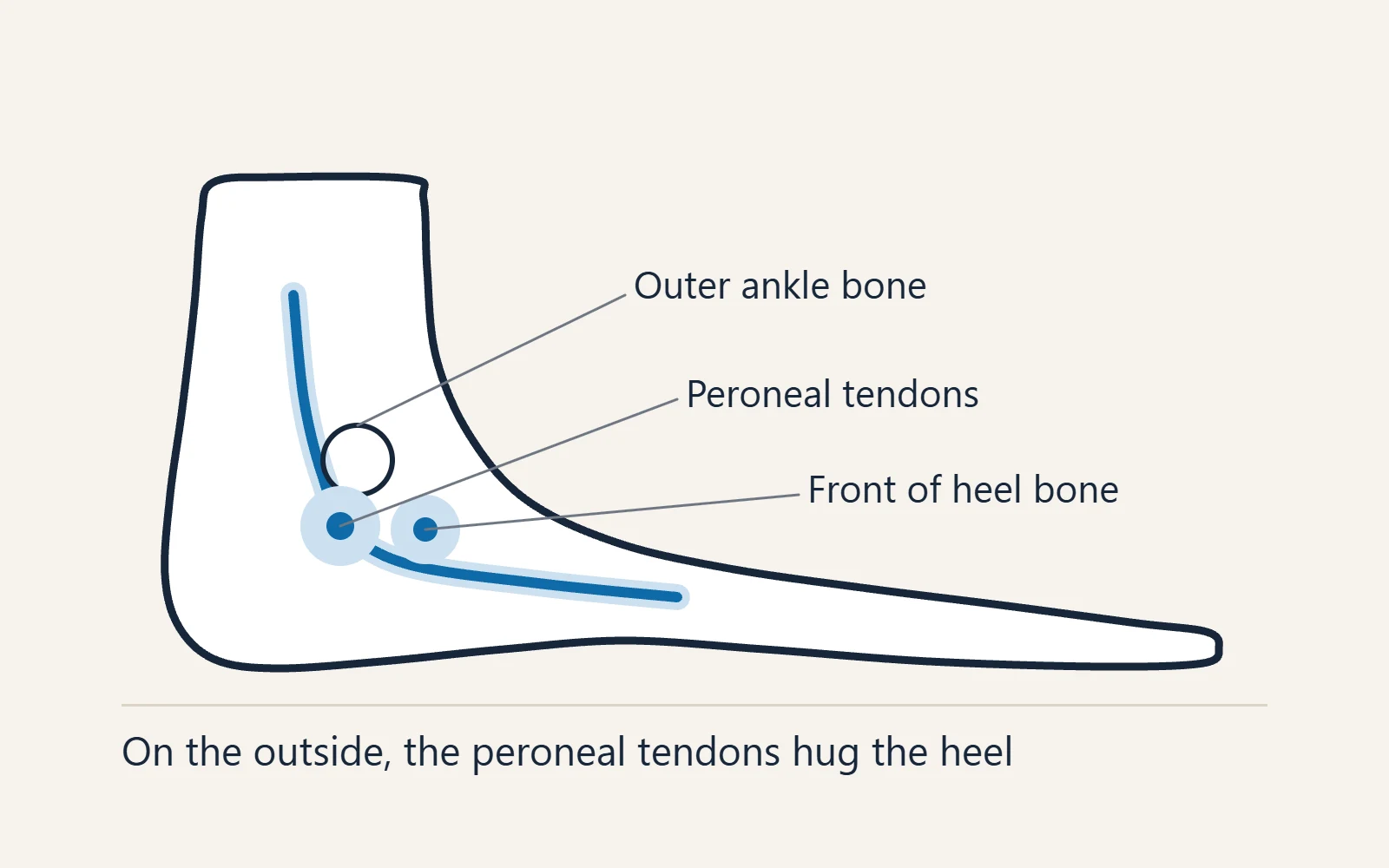
- Outside, just behind and below the outer ankle bone. Pain along a cord that wraps around the back of the outer ankle bone and runs forwards along the side of the heel is the peroneal tendons until proven otherwise.
- Outside, a thumb-width in front of the outer ankle bone and slightly down. Sharp pain here after a “sprain” can be a small fracture of the front of the heel bone (the anterior process), not a ligament.
- Squeeze the heel from both sides at once. If squeezing the heel bone between your palms hurts, and the pain has crept up with walking or running, think stress fracture.
The causes at a glance
| Cause | Side | Where and how it hurts | Read next |
|---|---|---|---|
| Plantar fasciitis | Inner, low | Inner-bottom edge of the heel; worst on the first steps in the morning and after sitting | Plantar fasciitis |
| Baxter’s nerve entrapment | Inner | Burning or aching on the inner side of the heel, often worse as the day goes on rather than first thing | Heel nerve pain |
| Tarsal tunnel syndrome | Inner, behind the ankle bone | Tingling, burning or numbness spreading into the arch, heel or toes; tapping behind the ankle bone can set it off | Tarsal tunnel syndrome |
| Posterior tibial tendonitis | Inner, behind and below the ankle bone | Aching along the tendon into the arch; the arch may be slowly flattening; hard to rise onto tiptoe on that foot | See below |
| Peroneal tendonitis or tear | Outer | Along the cord behind and below the outer ankle bone; worse on uneven ground, slopes and with the foot rolling out | See below |
| Anterior process fracture | Outer, front | Sharp spot just in front of and below the outer ankle bone after an ankle “sprain” that never settled | See below |
| Calcaneal stress fracture | Both | Builds with walking or running; squeezing the heel from both sides hurts; may ache at rest | Heel stress fracture |
| Inflammatory arthritis | Both, often both heels | Stiff and sore at several attachment points; morning stiffness lasting more than half an hour | Inflammatory heel pain |
Pain on the inside of the heel
Plantar fasciitis that has spread to the side
The plantar fascia attaches to the inner-bottom corner of the heel bone, not dead centre. So plenty of people with ordinary plantar fasciitis point to the inside of the heel, not the bottom. If it is worst on the first steps out of bed and eases after a few minutes of walking, that is the fascia, and the plantar fasciitis treatment plan is where to start.
Baxter’s nerve
A small branch of the nerve that supplies the bottom of the foot runs right past the fascia’s attachment and can get pinched there. I suspect it when someone has “plantar fasciitis” that does not behave like it: little morning pain, a burning or deep ache on the inner side of the heel that builds through the day, and no response to months of stretching. Nerve causes are thought to sit behind a meaningful share of stubborn heel pain, and they are routinely missed because the spot is so close to the fascia. The heel nerve pain page covers how to tell them apart.
Tarsal tunnel syndrome
Behind the inner ankle bone, the main nerve to the sole of the foot runs through a tight channel. When it is compressed, the giveaway is the quality of the pain: tingling, pins and needles, burning or numbness, often spreading into the arch or toes, and sometimes worse at night. Tapping just behind the ankle bone may reproduce it. Flat feet, swelling, varicose veins and old ankle injuries can all crowd the tunnel. See tarsal tunnel syndrome.
Posterior tibial tendonitis
This tendon wraps behind the inner ankle bone and holds up the arch. When it is irritated, the ache follows the tendon from behind the ankle bone into the arch, and people often notice the foot slowly flattening or the shoe wearing on the inside. The test I give patients: stand on the sore foot alone and rise onto tiptoe. If you cannot, or the heel does not swing inwards as you rise, the tendon is struggling. This one needs attention early, because a tendon that keeps stretching out leads to a flatfoot that is much harder to fix later.
Pain on the outside of the heel
Peroneal tendons: the usual culprit
Two tendons, the peroneals, run down the outside of the leg, hook behind the outer ankle bone and sweep forwards along the outer side of the heel. They are the main cause of outer-heel pain that comes on without a single injury. The typical person has a high arch or a foot that rolls outwards, has had a few ankle sprains over the years, and notices it most on uneven ground, slopes or cambered roads.
A pattern I see often: a runner switches to a softer, higher shoe, starts trail running, and three weeks later the outer heel aches along a line just below the ankle bone. That is not plantar fasciitis and it will not respond to arch stretches. It responds to a more stable shoe, a few weeks off the trails, and strengthening the muscles that turn the foot outwards.
A tendon that clicks or slides over the ankle bone, or swelling that keeps coming back, can mean a split tear or a tendon slipping out of its groove. Those deserve an exam and often an ultrasound or MRI, because they do not heal by being ignored.
The “sprain” that was a fracture
This is the one I most want readers to know about. The front of the heel bone, the anterior process, can be pulled off by the same twisting injury that sprains an ankle. It sits a thumb-width in front of and below the outer ankle bone, right next to where the sprained ligament is, and it is easy to miss on a quick X-ray. People are told they have a bad sprain, and six or eight weeks later they still have one sharp, very specific spot of pain. If your sprain never settled and the sore spot is there rather than over the ankle ligaments, ask for it to be looked at specifically.
Sural nerve
A thin sensory nerve runs along the outer edge of the heel and foot. Tight boots, a scar, an old fracture or an ankle sprain can irritate it. The clue is numbness, tingling or burning along the outer edge of the heel and foot rather than a deep ache. It is less common, but it explains some outer-heel pain that never fits a tendon picture.
Pain on both sides at once
If squeezing the heel bone from both sides hurts, the bone is the suspect. A calcaneal stress fracture builds over weeks with walking, running or a jump in activity, and classically hurts with that squeeze test. It is the one heel problem I tell people never to push through: stop the activity and get an X-ray, and know that early stress fractures often do not show on the first one.
Pain on the sides of both heels at once, especially in a younger adult with back or other joint stiffness, raises the question of inflammatory arthritis. That is a blood-test and examination question, not a shoe question.
What helps in the meantime
Until you know exactly what it is, these are safe for nearly every side-of-heel problem:
- A stable shoe with a firm heel counter. Squeeze the back of the shoe; it should not fold. Soft, high-stack shoes let the heel wobble, and both the inner and outer tendons pay for it.
- Match the support to the side. Inner-side tendon or arch pain usually does better with real arch support. Outer-side peroneal pain in a high-arched foot often does better with an insert that keeps the heel from tipping outwards. The wrong insert can make the other side worse, which is why I do not recommend one insert for all heel pain.
- Cut the provocative activity, not all activity. Trails, slopes and cambered roads for the outer heel; long standing and barefoot walking for the inner heel. Swap in a bike or pool for two to three weeks.
- Nerve pain needs room, not pressure. If it burns or tingles, loosen laces and boots, and skip hard massage directly over the painful spot.
- Ice for 10 to 15 minutes after activity for tendon pain. It will not cure anything, but it settles a flare.
You will not find a large trial comparing insert designs for outer-heel tendon pain. That is a funding problem, not a sign that inserts do not work: nobody pays for big studies of shoes and orthotics. In clinic, getting the support on the right side is one of the most reliable changes I make.
Shoes and inserts for this heel. Side-of-heel pain needs a firm heel counter and support matched to the sore side. See shoes for heel pain, by cause and insoles for heel pain.
When to be seen quickly
Same day: you cannot put weight on the foot after a twist or fall; the heel or ankle is badly swollen and bruised; or the foot is hot, red and swollen, especially with fever or diabetes.
Within days: a sprain that is still sharply sore at one spot after two to three weeks; heel pain that builds with activity and hurts when the heel is squeezed; numbness or tingling that is spreading; a tendon that clicks or slips around the ankle bone; or an arch that is visibly flattening.
For a wider list of red flags, see when to worry about heel pain.
Common questions
What causes pain on the outside of the heel?
Most often the peroneal tendons, which run behind the outer ankle bone and along the side of the heel. Next come a missed fracture of the front of the heel bone after an ankle sprain, irritation of the sural nerve along the outer edge of the foot, and a heel stress fracture. Outer-heel pain is rarely plantar fasciitis.
What causes pain on the inside of the heel?
Usually the plantar fascia, which attaches to the inner-bottom corner of the heel. Nerve causes come next: Baxter’s nerve near the fascia attachment and the tibial nerve in the tarsal tunnel behind the inner ankle bone. The posterior tibial tendon is another cause, especially if the arch is flattening.
Is pain on the side of the heel plantar fasciitis?
On the inner side, often yes, because the fascia attaches on the inner-bottom corner of the heel. On the outer side, almost never. If it is worst on the first steps in the morning and eases with walking, the fascia is likely. Burning, tingling or pain that builds through the day points elsewhere.
Why does the side of my heel hurt when I walk?
Each step loads the tendons that steady the heel and squeezes the nerves that run around it. On the outer side, slopes, trails and shoes that let the heel tip outwards overload the peroneal tendons. On the inner side, a flattening arch strains the posterior tibial tendon and the fascia. Pain that steadily builds with walking and hurts when you squeeze the heel needs an X-ray for a stress fracture.
Can a sprained ankle cause pain on the side of the heel?
Yes. The same twist can strain the peroneal tendons, irritate the sural nerve or break off a small piece of the front of the heel bone (the anterior process). If one spot just in front of and below the outer ankle bone is still sharply sore weeks after a sprain, have it examined specifically for that fracture.
How long does side-of-heel pain take to heal?
It depends on the cause. Peroneal or posterior tibial tendonitis caught early usually settles in four to eight weeks with the right shoe, support and strengthening. Nerve entrapment can take longer. Stress fractures need six to eight weeks of protected loading. Pain that is not clearly improving after a month deserves an examination.
Related heel pain guides
- Heel pain causes by location — the map, if the pain is underneath or at the back.
- Back of heel pain — the Achilles, the bursae and Haglund’s.
- Heel nerve pain — Baxter’s nerve and other burning heel pain.
- Tarsal tunnel syndrome — tingling behind the inner ankle bone.
- Plantar fasciitis — the most common cause of inner-heel pain.
- Heel stress fracture — the one not to push through.
- Can plantar fasciitis cause ankle or side-of-foot pain?
- Inflammatory heel pain — when both heels hurt.
Side-of-heel pain in Michigan?
Telling a tendon from a nerve from a missed fracture takes a few minutes of hands-on examination, and it changes the treatment completely. Dr. Biernacki sees side-of-heel pain in Howell and Bloomfield Township.
Further reading
- Tu P. Heel Pain: Diagnosis and Management. American Family Physician, 2018.
- Davda K, Malhotra K, O’Donnell P, et al. Peroneal tendon disorders. EFORT Open Reviews, 2017.
- Alshami AM, Souvlis T, Coppieters MW. A review of plantar heel pain of neural origin: differential diagnosis and management. Manual Therapy, 2008.
- Schon LC, Glennon TP, Baxter DE. Heel pain syndrome: electrodiagnostic support for nerve entrapment. Foot & Ankle, 1993.
- Ahmad M, Tsang K, Mackenney PJ, Adedapo AO. Tarsal tunnel syndrome: a literature review. Foot and Ankle Surgery, 2012.
- Kohls-Gatzoulis J, Angel JC, Singh D, et al. Tibialis posterior dysfunction: a common and treatable cause of adult acquired flatfoot. BMJ, 2004.
- Borawski J, Dawson LK, Crowell MS. Anterior process of the calcaneus fracture following an acute ankle sprain. JOSPT Cases, 2021.
This page is education, not a diagnosis. Read our editorial policy for how it was written and what it will not claim.