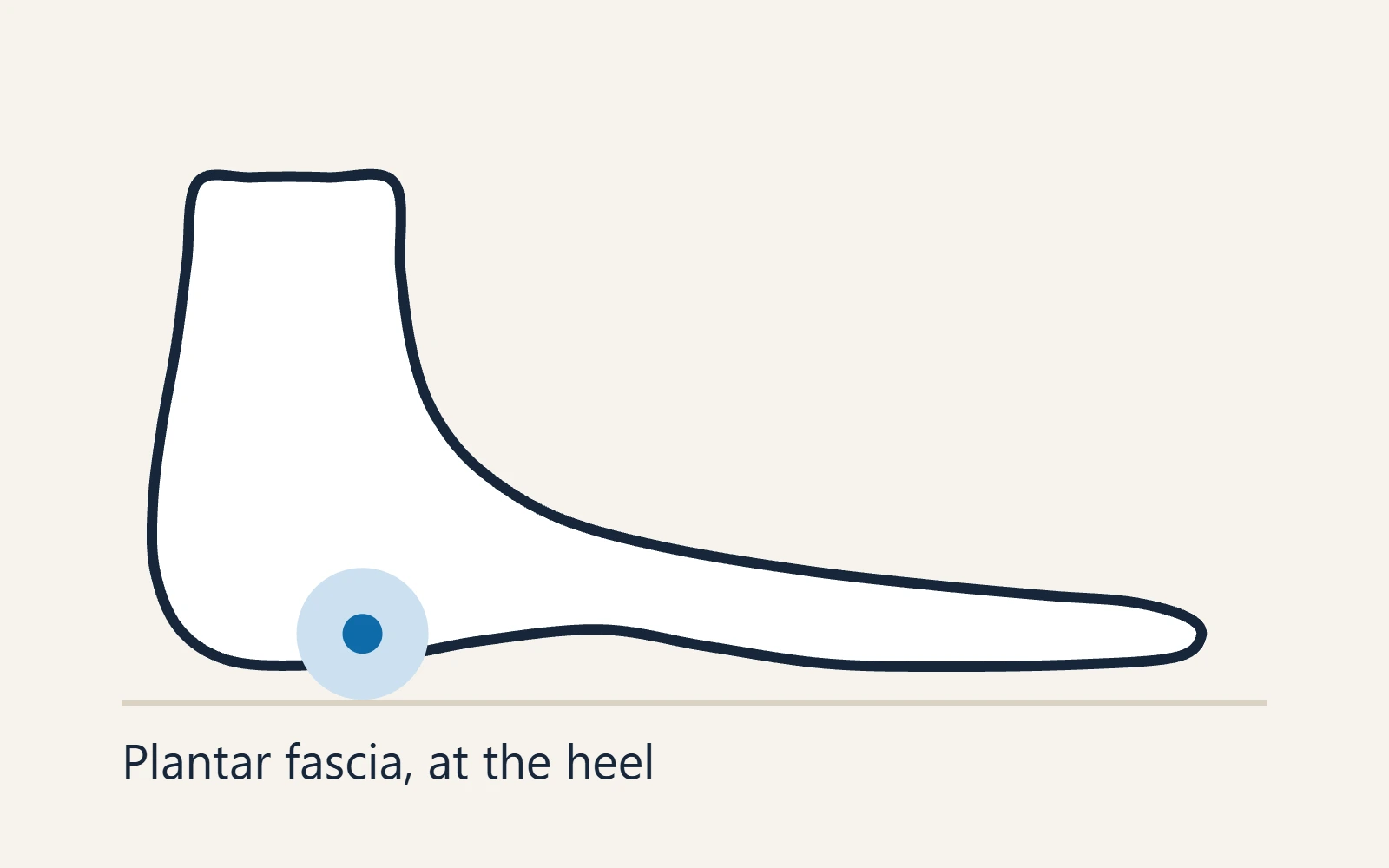
Heel pain treatment
Plantar fasciitis socks and compression sleeves: do they help?
“Plantar fasciitis socks” covers four different products: compression sleeves, compression socks, cushioned socks and night-splint socks. One of them is a genuine treatment with evidence behind it. The others are comfort items, which is fine, as long as you know which you are buying.
Plantar fasciitis socks are cheap, low-risk and widely recommended by people who wear them. They are also one of the least studied products sold for heel pain. That is not a reason to avoid them. It is a reason to buy the right type, set your expectations, and not let a sock replace the things that actually change the heel.
On this page
The four products sold as plantar fasciitis socks
| Product | What it does | Worth it for |
|---|---|---|
| Compression foot sleeve open-toed, snug band around the arch and heel |
Firm pressure around the arch; a feeling of support; may ease morning stiffness for some | Comfort, especially first thing and on long days. Low cost, low risk |
| Graduated compression sock knee-high, tighter at the ankle |
Reduces ankle and leg swelling by squeezing fluid upwards | Swelling and long hours standing; does little for the fascia itself |
| Cushioned or padded sock | Extra padding under the heel and ball of the foot | A bruised or thinned heel pad, hard floors |
| Night-splint sock a sock with a strap from the toes to the shin |
Holds the toes and ankle up overnight so the fascia does not shorten | Severe first-step pain in the morning. This one is a treatment |
Do compression sleeves work?

There is very little direct trial evidence for compression foot sleeves in plantar fasciitis, and they do not appear among the treatments recommended in the clinical practice guidelines. What they plausibly do is modest: steady pressure around the arch and heel feels supportive, may dampen pain a little through the same mechanism that makes rubbing a sore spot feel better, and helps some people feel less stiff on their first steps.
What a sleeve cannot do is meaningfully support the arch under body weight. A band of fabric does not hold the arch up the way a firm insole does, and it does not lengthen a tight calf the way stretching does. So a sleeve can be part of making the day more comfortable. It should not be the treatment.
The fair test: if a sleeve makes your first steps or your working day more comfortable, keep wearing it. If after two weeks you cannot tell the difference, it is not doing anything for your heel, and the money is better spent on a supportive insole or better shoes.
The sock that is actually a splint
The night-splint sock looks like a long sock with a strap running from the toes to a band below the knee. Tightened gently before bed, it holds the toes and ankle up overnight, so the plantar fascia does not shorten while you sleep. That is exactly the mechanism of a rigid night splint, in a form most people find far easier to sleep in.
For a heel whose worst pain is the first few steps out of bed, this is the one “sock” with a real treatment effect. It is the wrong choice for pain at the back of the heel, because holding the ankle up compresses the Achilles insertion. Night splints for plantar fasciitis covers the types, how to set the tension, and who should avoid them.
What about plantar fasciitis braces?
“Brace” is used for three different things. Arch braces and ankle sleeves with an arch strap are, in effect, firmer compression sleeves: comfortable for some, with the same limits. Night splints, in boot, dorsal or sock form, are the braces with evidence, for morning pain. And walking boots are a short-term option for a very irritable heel that needs a break from load; see walking boots for plantar fasciitis.
If you are choosing one brace, choose by when your heel hurts most. Morning first-step pain points to a night splint. Pain through a long working day points to shoes and insoles first, with a sleeve as an optional extra.
Who should be careful with compression
Poor circulation. Graduated compression socks are not suitable for people with significant peripheral arterial disease, and should be checked with a clinician if your feet are often cold, pale or painful when walking.
Diabetes or reduced feeling. Tight sleeves and bands can mark or damage skin you cannot feel. Check your feet daily, and take advice before using compression.
Numbness, tingling or colour change while wearing a sleeve means it is too tight. Take it off.
Heel pain that worsens through the day rather than easing can be a stress fracture, which no sock treats.
Where socks fit in the plan
The things that change plantar fasciitis are, in order: reducing load with supportive shoes worn indoors as well as out and insoles; increasing what the fascia can tolerate with stretching and progressive loading; and, for morning pain, a night splint. A compression sleeve or a cushioned sock can sit alongside those as a comfort measure. The treatment ladder sets out the full sequence.
Want the plan, not another product? The free 14-day plan from Dr. Tom’s Heel Pain Playbook puts shoes, stretches and heel raises in the order he gives them in clinic, with a tracker that shows by day 14 whether it is working. Get the free 14-day plan.
Watch
Dr. Biernacki on which plantar fasciitis devices earn their place and which make heel pain worse.
Common questions
Do plantar fasciitis socks work?
It depends on the sock. Night-splint socks, which hold the toes and ankle up overnight, work for morning first-step pain in the same way as other night splints. Compression sleeves have little direct evidence; some people find them comfortable, especially first thing, but they do not support the arch or treat the tissue. Cushioned socks help a bruised heel pad.
Should I wear compression socks to bed for plantar fasciitis?
Ordinary compression sleeves or socks are not designed for overnight use and offer little benefit while you are lying down. The product that helps at night is a night-splint sock or splint, which holds the foot in a neutral position so the fascia does not shorten. Remove anything that leaves deep marks, numbness or colour change.
Are compression sleeves the same as a plantar fasciitis brace?
Many products sold as braces are firmer compression sleeves with an arch strap, and they behave similarly: comfortable for some, with limited support under body weight. The braces with evidence are night splints, which work on morning pain.
Can I wear a compression sleeve with insoles and shoes?
Yes. A thin sleeve fits under a normal sock in most shoes. Check it does not make the shoe tight, especially with a full-length insole already taking up room.
Are copper or toe-separator socks better?
There is no good evidence that copper fibres add anything for heel pain. Toe-separator socks address the toes, not the heel. Choose by the job you need done — comfort, cushioning or overnight positioning — rather than by material claims.
- Koc TA, et al. Heel Pain – Plantar Fasciitis: Revision 2023. Clinical Practice Guidelines, Journal of Orthopaedic & Sports Physical Therapy.
- Buchanan BK, et al. Plantar Fasciitis. StatPearls, NCBI Bookshelf.
- American Academy of Orthopaedic Surgeons, OrthoInfo. Plantar Fasciitis and Bone Spurs.
Related heel pain guides
- Night splints and braces for plantar fasciitis
- Insoles for plantar fasciitis
- Best shoes for plantar fasciitis
- KT tape for plantar fasciitis
- Heel cups
- Plantar fasciitis treatment
- Shoes, inserts and kit
Heel pain in Michigan?
Dr. Biernacki sees heel pain at Balance Foot & Ankle in Howell and Bloomfield Township. If shoes, inserts and three months of loading have not shifted it, the useful question is whether the diagnosis is right.
This page is education, not a diagnosis. Read our editorial policy for how it was written and what it will not claim.